
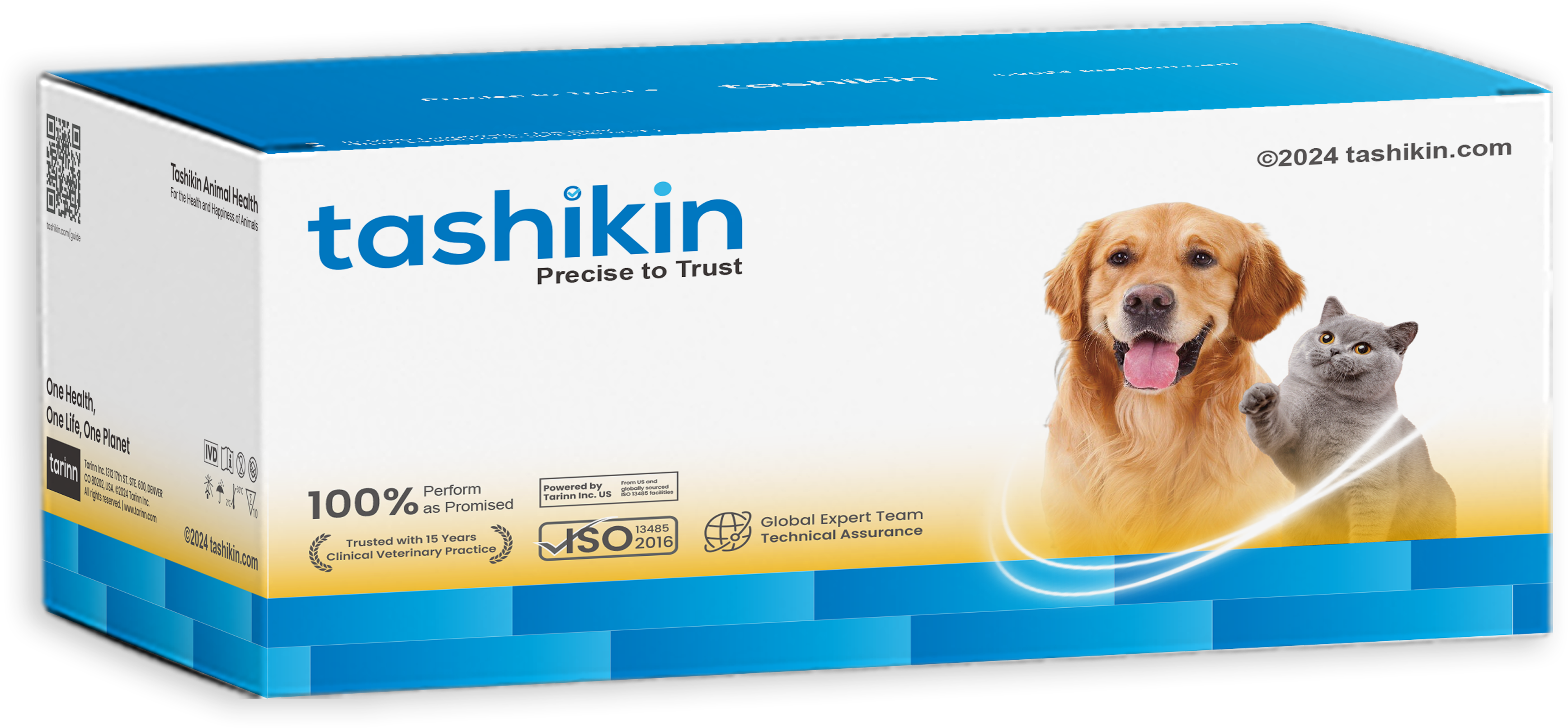
Canine Adenovirus Type II/Bronchial Bordetella Combo Test Kit (Probe Method)
Rapid and reliable molecular detection of key canine respiratory pathogens, enabling precise diagnosis and targeted treatment strategies for improved patient outcomes.
Technology
Sample Type
Time to Result
Kit Size
Canine respiratory diseases, often caused by a complex of pathogens, can present with similar clinical signs, making differential diagnosis challenging. The Tashikin Canine Adenovirus Type II/Bronchial Bordetella Combo Test Kit provides a highly sensitive and specific real-time PCR solution for the rapid and accurate detection of these two significant respiratory agents. This molecular approach offers superior precision compared to traditional methods, enabling veterinarians to quickly identify the causative agents, guide targeted treatment protocols, and implement effective disease management strategies, especially in multi-dog environments.
Your Path to a Confident Diagnosis:
Identify Co-infections
Detect multiple respiratory pathogens simultaneously to understand complex cases and improve diagnostic accuracy.
Guide Treatment Decisions
Rapidly identify the causative agent to prescribe effective and targeted therapies, minimizing antibiotic overuse.
Manage Outbreaks
Early and accurate detection supports swift isolation and prevention strategies in kennels and shelters.
| Parameter | Value |
|---|---|
| Analyte | Canine Adenovirus Type II DNA, Bordetella bronchiseptica DNA |
| Methodology | real-time quantitative PCR (qPCR) |
| Detection Range | Qualitative |
| Sample Type | Canine Nasopharyngeal Swab, Tracheal Wash, or Bronchoalveolar Lavage (BAL) fluid |
| Sample Volume | 200 µL |
| Assay Time | < 90 Minutes |
| Kit Size | 10 Tests / Kit |
| Storage | 2-30°C (36-86°F) |
| Shelf Life | 24 months from date of manufacture |
Performance validated against gold-standard reference methods for superior clinical correlation.
1. Prepare Sample
Collect canine nasopharyngeal swab, tracheal wash, or BAL fluid using sterile techniques.
2. Extract Nucleic Acid
Perform nucleic acid extraction from the collected sample according to standard laboratory protocols.
3. Set Up qPCR Reaction
Prepare the qPCR master mix, add extracted nucleic acid, and load into the real-time PCR instrument.
4. Analyze Results
Run the pre-programmed qPCR cycle and interpret results based on amplification curves and Ct values.
Integrate Data for a Clearer Clinical Picture
A single test provides an answer for today, but tracking results over time reveals the full story. By logging results in Tashikin's VetEx.ai platform, you build a comprehensive patient history, visualize trends, and enhance your clinical decision-making.
Learn About VetEx.ai