
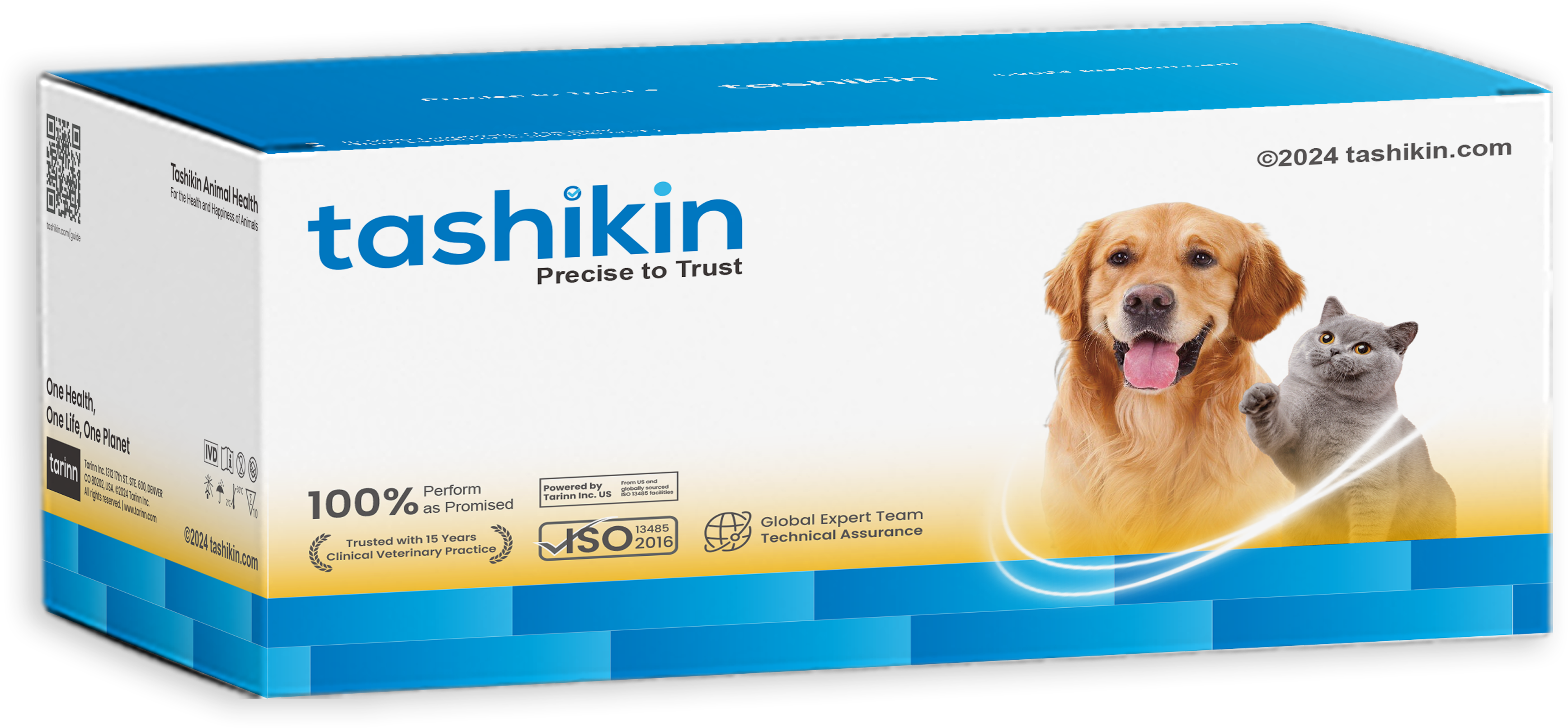
Feline Polycystic Kidney Disease Genetic Test Kit (Probe Method)
Empower proactive feline health management with precise genetic screening for Polycystic Kidney Disease, enabling early detection and informed breeding decisions.
Technology
Sample Type
Time to Result
Kit Size
Feline Polycystic Kidney Disease (PKD) is an inherited condition primarily affecting Persian and related cat breeds, leading to the development of fluid-filled cysts in the kidneys. Early and accurate diagnosis is crucial for managing the disease progression and for implementing responsible breeding programs to prevent its spread. Tashikin's Feline PKD Genetic Test Kit utilizes advanced PCR technology to identify the specific genetic mutation responsible for PKD, offering veterinarians a definitive diagnostic tool to protect feline health and inform owners.
Your Path to a Confident Diagnosis:
Screen At-Risk Breeds
Proactively test Persian, Himalayan, and other susceptible breeds for the PKD1 gene mutation.
Confirm Clinical Suspicions
Provide definitive genetic confirmation for cats presenting with symptoms or ultrasound findings suggestive of PKD.
Guide Breeding Decisions
Identify carriers or affected cats to inform responsible breeding practices and reduce disease incidence.
| Parameter | Value |
|---|---|
| Analyte | PKD1 Gene Mutation |
| Methodology | real-time quantitative PCR (qPCR) |
| Detection Range | Qualitative |
| Sample Type | Feline Whole Blood, Saliva, or Tissue |
| Sample Volume | 20 µL |
| Assay Time | < 90 Minutes |
| Kit Size | 10 Tests / Kit |
| Storage | 2-30°C (36-86°F) |
| Shelf Life | 24 months from date of manufacture |
Performance validated against gold-standard reference methods for superior clinical correlation.
1. Prepare Sample
Collect appropriate feline sample (e.g., whole blood, saliva) and extract DNA according to standard laboratory protocols.
2. Prepare Reaction Mix
Combine extracted DNA with PCR master mix and specific primers/probes for PKD1 gene.
3. Run PCR
Load reaction mix into a real-time PCR instrument and initiate the amplification and detection cycle.
4. Analyze Results
Interpret the amplification curves and Ct values to determine the presence or absence of the PKD1 mutation.
Integrate Data for a Clearer Clinical Picture
A single test provides an answer for today, but tracking results over time reveals the full story. By logging results in Tashikin's VetEx.ai platform, you build a comprehensive patient history, visualize trends, and enhance your clinical decision-making.
Learn About VetEx.ai