
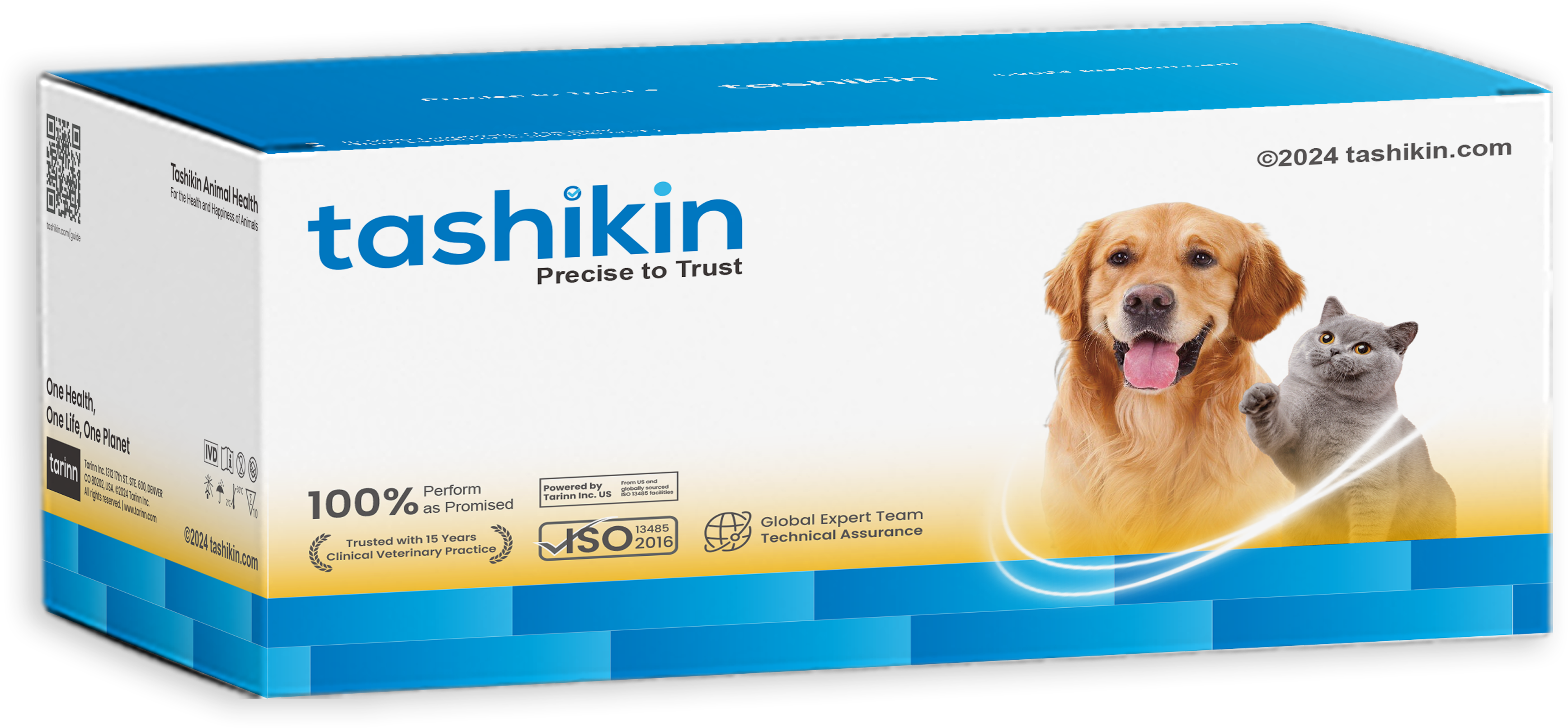
Mycoplasma nucleic acid test kit (Probe Method)
Utilize real-time PCR technology for highly sensitive and specific detection of Mycoplasma nucleic acid, enabling precise diagnosis of respiratory infections in veterinary patients.
Technology
Sample Type
Time to Result
Kit Size
Mycoplasma species are significant pathogens implicated in various veterinary respiratory diseases, ranging from mild tracheobronchitis to severe pneumonia. Traditional diagnostic methods can be time-consuming and lack sensitivity, often delaying crucial treatment decisions. The Tashikin Mycoplasma nucleic acid test kit leverages advanced real-time quantitative PCR (qPCR) technology to offer a highly sensitive, specific, and rapid solution for detecting Mycoplasma DNA. This enables veterinarians to quickly identify the causative agent, implement targeted therapies, and improve patient outcomes by reducing empirical antibiotic use and preventing disease spread.
Your Path to a Confident Diagnosis:
Identify Suspected Cases
Rapidly screen animals presenting with respiratory symptoms for Mycoplasma infection.
Confirm Etiology
Precisely confirm Mycoplasma as the causative pathogen, guiding specific treatment.
Monitor Treatment & Control
Assess treatment efficacy and support disease control strategies within a population.
| Parameter | Value |
|---|---|
| Analyte | Mycoplasma nucleic acid |
| Methodology | real-time quantitative PCR (qPCR) |
| Detection Range | Qualitative |
| Sample Type | Tracheal washes, Bronchoalveolar lavage fluid (BALF), Nasal swabs, Tissue |
| Sample Volume | Variable (e.g., 200 µL extracted nucleic acid) |
| Assay Time | < 90 Minutes |
| Kit Size | 10 Tests / Kit |
| Storage | 2-30°C (36-86°F) |
| Shelf Life | 24 months from date of manufacture |
Performance validated against gold-standard reference methods for superior clinical correlation.
1. Sample Collection & Nucleic Acid Extraction
Collect appropriate clinical samples (e.g., tracheal wash, BALF). Extract nucleic acid using a validated extraction method.
2. Prepare Reaction Mix
Combine extracted nucleic acid with the provided PCR master mix and primers/probes.
3. Run qPCR
Load the reaction mix into a real-time PCR instrument and initiate the amplification protocol.
4. Analyze Results
Interpret the amplification curves and Ct values to determine the presence or absence of Mycoplasma nucleic acid.
Integrate Data for a Clearer Clinical Picture
A single test provides an answer for today, but tracking results over time reveals the full story. By logging results in Tashikin's VetEx.ai platform, you build a comprehensive patient history, visualize trends, and enhance your clinical decision-making.
Learn About VetEx.ai